On August 10, 2026, HHS announced that FDA had issued a proposed rule that would replace the current voluntary GRAS notification program with a mandatory notification requirement for substances added to human and animal food.
If finalized, manufacturers would generally be required to notify FDA of GRAS conclusions that can currently be reached independently without Agency notification. The proposal also includes a streamlined submission pathway for certain substances already in commerce.
The proposed rule does not change current requirements at this time. FDA has established a 120-day public comment period following publication in the Federal Register, during which stakeholders may submit comments before FDA considers the feedback received and determines how to proceed with a final rule.For manufacturers, the immediate priorities are to understand the proposed requirements, assess existing self-affirmed GRAS conclusions and supporting documentation, and determine whether to participate in the public comment process.
Join our free webinar, GRAS Under Pressure: Preparing for New FDA Regulations, on September 2 at 1:00 PM ET.
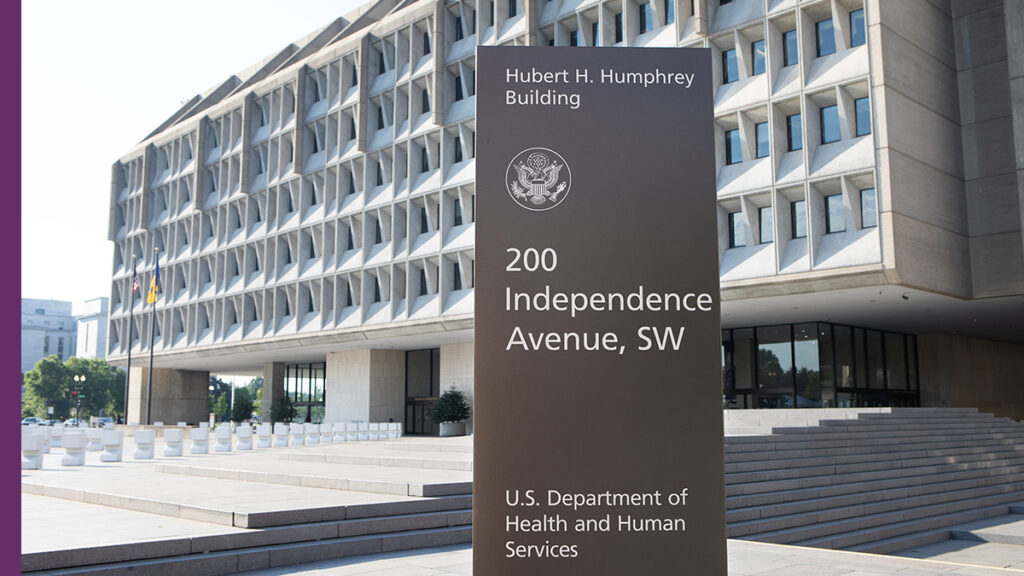
On August 10, 2026, the U.S. Department of Health and Human Services (HHS) announced that the U.S. Food and Drug Administration (FDA) had issued a proposed rule that would require manufacturers to notify the Agency when concluding that the intended use of a substance added to human or animal food is Generally Recognized as Safe (GRAS).
If finalized, the rule would convert FDA’s existing voluntary GRAS notification program into a mandatory notification program. Under the current framework, manufacturers may reach a self-affirmed GRAS conclusion following scientific review, including through an independent panel of qualified experts, and may notify FDA of that conclusion, but are not required to do so. The proposed rule would generally require notification for uses of substances introduced into interstate commerce under the GRAS provision.
Importantly, these requirements are not yet in effect. FDA states that the information collection requirements will not become effective until a final rule is published, the applicable requirements receive Office of Management and Budget (OMB) approval, and the rule goes into effect.
The proposal therefore provides industry with a defined framework to evaluate, while the current GRAS regulatory requirements remain in place during the rulemaking process.
The proposed rule would establish mandatory GRAS notification for certain uses of substances in human and animal food. In practical terms, manufacturers that might currently rely on a self-affirmed GRAS conclusion, including one supported by an independent panel of qualified experts, without notifying FDA would generally be required to submit a GRAS notice if the rule is finalized.
The proposal would also establish a time-limited streamlined submission pathway for certain uses of substances introduced into interstate commerce before the effective date of a final rule. This pathway is intended to bring existing GRAS conclusions into the notification framework without requiring every legacy use to follow the same process applicable to new GRAS notices. FDA anticipates that manufacturers using this option would incur costs associated with preparing and submitting these streamlined submissions.
For new uses introduced after the effective date of a final rule, affected manufacturers would be expected to prepare and submit GRAS notices for uses that otherwise could have been supported through an independent GRAS conclusion, including conclusions supported by an expert panel.
The proposal does not replace the GRAS standard itself. Rather, it would change the notification requirements associated with relying on the GRAS provision.
FDA’s primary rationale is that the voluntary notification system does not provide the Agency with complete information about substances being introduced into the food supply under independent GRAS conclusions.
Under the current framework, FDA may not receive or review the scientific basis for a GRAS conclusion unless a manufacturer voluntarily submits a notice. FDA states that mandatory notification would make more information available to both the Agency and the public and improve its ability to determine whether a use qualifies as GRAS or instead constitutes a food additive use requiring premarket review and approval.
FDA also states that the proposed system would help identify potentially unsafe substances, confirm that GRAS conclusions have an appropriate scientific basis, and ensure that supporting documentation exists.
For regulatory teams, the practical distinction is important: the proposal is primarily directed at FDA visibility, notification, and documentation, rather than establishing a new scientific standard for GRAS determinations.
The publication of a proposed rule does not itself create a mandatory notification requirement.
Until a final rule is issued and becomes effective, manufacturers may continue operating under the existing GRAS framework. A company may therefore continue to establish a self-affirmed GRAS conclusion under the existing framework, including through review by an independent panel of qualified experts, without submitting a voluntary GRAS notice to FDA, provided the conclusion satisfies applicable statutory and regulatory requirements.
This also means that existing self-affirmed GRAS conclusions do not automatically require submission as a result of the August announcement.
However, the proposed treatment of both existing and future GRAS conclusions provides manufacturers with an opportunity to assess their current portfolios and determine how readily their documentation could support notification if the proposed framework is ultimately finalized.
Following publication in the Federal Register, FDA will accept comments on the proposed rule for 120 days. Electronic comments may be submitted through Regulations.gov, and written comments may also be submitted using the docket identified in the proposed rule. FDA states that late comments will not be considered.
Comments may be submitted electronically through Regulations.gov or in writing to FDA’s Dockets Management Staff. All submissions should reference Docket No. FDA-2025-N-3262, “Substances Generally Recognized as Safe.” Electronic comments are posted publicly, so companies should avoid including confidential business information in online submissions. FDA provides a separate process for written submissions containing confidential information.
The comment period gives affected stakeholders an opportunity to address both the overall framework and specific implementation issues. For regulatory teams, relevant topics may include:
Comments do not need to support or oppose the proposal in its entirety. They may provide technical data, identify practical implementation concerns, recommend alternative approaches, or request clarification on specific provisions.
Companies with significant exposure to the GRAS framework should consider whether the proposal raises issues that warrant an individual submission or coordinated comments through an industry association.
FDA is proposing a time-limited streamlined submission option for certain uses of substances that were introduced into interstate commerce under the GRAS provision before the effective date of a final rule.
This is particularly relevant for companies with existing self-affirmed GRAS conclusions. Rather than requiring all legacy uses to immediately enter the standard GRAS notice process, the proposal would create a separate mechanism for certain pre-existing uses.
The final eligibility criteria, information requirements, timing, and implementation details will depend on the outcome of the rulemaking process. However, the proposal makes clear that FDA intends to address substances already in commerce, not only new GRAS conclusions reached after a final rule becomes effective.
For manufacturers, this means existing self-affirmed GRAS portfolios should be included in regulatory planning. Companies do not need to submit those conclusions today, but they should understand which substances and intended uses rely on independent GRAS determinations and whether the supporting documentation remains current.
Several areas of the proposal are likely to be important during the comment period and subsequent rulemaking.
Confidential business information is one of them. GRAS dossiers may contain proprietary manufacturing details, specifications, or other commercially sensitive information. FDA’s existing procedures distinguish between information available for public disclosure and information protected from disclosure, but mandatory notification would make this issue relevant to a substantially larger number of submissions.
FDA review capacity is another practical consideration. A mandatory system would increase the number of GRAS notices and streamlined submissions received by the Agency. FDA’s own economic analysis anticipates both one-time costs associated with legacy submissions and recurring costs associated with reviewing GRAS notices that otherwise may have remained independent conclusions.
Regulatory teams should also monitor how the final rule addresses overlapping regulatory pathways. Depending on the substance and intended use, companies may need to consider whether GRAS remains the appropriate pathway or whether another mechanism, such as a food additive petition or New Dietary Ingredient Notification, may apply.
The proposal does not require immediate submission of existing self-affirmed GRAS conclusions. However, it provides enough detail for companies to begin assessing their readiness.
A practical first step is to identify which substances and intended uses currently rely on independent GRAS conclusions. From there, manufacturers should assess whether the supporting dossiers remain scientifically and operationally current.
That review should consider whether:
For companies with multiple GRAS conclusions, prioritizing older dossiers or those supporting commercially significant ingredients may be appropriate.
The objective at this stage is not to comply with a rule that has not yet been finalized. It is to identify potential gaps while there is still time to address them and to determine whether the proposed rule raises issues that should be addressed during the 120-day comment period.
For food manufacturers, ingredient suppliers, and brand owners, the proposal increases the regulatory value of maintaining complete, current, and submission-ready GRAS documentation.
Under the current framework, a self-affirmed GRAS conclusion may remain entirely outside FDA’s notification system. If the proposal is finalized, that distinction would narrow substantially because FDA would generally expect notification of GRAS conclusions and would also receive information on certain existing uses through the proposed streamlined pathway.
The practical effect is that GRAS documentation may increasingly need to serve two purposes: support the scientific conclusion itself and support communication of that conclusion to FDA.
That makes dossier quality, organization, and maintenance more important—not because FDA is proposing a new safety standard, but because the supporting basis for a GRAS conclusion may be subject to greater regulatory visibility.
The proposed rule increases the importance of maintaining a complete, scientifically robust, and well-organized GRAS dossier.
The good news is that a properly prepared GRAS dossier should already contain much of the information needed to support an FDA notification. The proposal does not establish a new scientific standard for GRAS conclusions; it would primarily change the requirement to communicate those conclusions to FDA.
At dicentra, our GRAS dossiers are prepared using the same scientific and regulatory standards expected for FDA-facing GRAS notices. As a result, self-affirmed GRAS dossiers we have prepared for clients should already be well-positioned for adaptation to an FDA notification if mandatory notification is ultimately finalized.
For companies that have developed GRAS conclusions internally or through other providers, now is an appropriate time to assess whether existing documentation is:
Older dossiers may warrant particular attention. A GRAS conclusion should reflect the substance and its intended conditions of use as they exist today. Changes in manufacturing, specifications, use levels, exposure, or the available scientific literature may therefore justify an updated assessment.
For new ingredients, companies should continue developing GRAS dossiers with the same level of scientific rigor expected for an FDA notification. This provides flexibility under the current framework while also preparing the dossier for a potential mandatory notification requirement.
In short, the strategic value of a well-prepared GRAS dossier is increasing.
The immediate next step is the 120-day public comment period. Manufacturers and other interested stakeholders can review the proposed requirements and submit comments addressing scientific, regulatory, economic, or implementation considerations before the deadline established in the proposed rule.
After the comment period closes, FDA will review the comments received and determine whether changes to the proposal are appropriate. A mandatory notification requirement will not take effect unless FDA completes the rulemaking process, publishes a final rule, and the applicable requirements become effective. FDA also states that the proposed information collection requirements will require OMB approval before becoming effective.
There is therefore no immediate requirement to submit existing self-affirmed GRAS conclusions. Regulatory teams should continue working within the current framework while monitoring the rulemaking process and preparing for the possibility that notification becomes mandatory.
Join dicentra on September 2 at 1:00 PM ET for GRAS Under Pressure: Preparing for New FDA Regulations, a free webinar examining FDA’s proposed mandatory GRAS notification framework and what it could mean for industry.
Dylan Fronda, Toxicology and Product Safety Manager at dicentra, will discuss the implications for existing GRAS dossiers, FDA review and public disclosure, the proposed streamlined submission pathway, and how companies can participate in the public comment period before the December 9 deadline.
dicentra supports food and ingredient manufacturers at every stage of GRAS strategy, including:
For companies with existing self-affirmed GRAS conclusions, dicentra can assess whether supporting documentation remains scientifically complete and determine what additional work may be necessary to prepare for notification if the proposed rule is finalized.
For new ingredients, developing a submission-ready dossier can help maintain flexibility between an independent GRAS conclusion under today’s framework and an FDA notification where appropriate.
FDA’s proposed rule provides a clearer direction for the future of the GRAS notification program. If finalized, manufacturers would generally be required to notify FDA of GRAS conclusions that can currently be reached independently without Agency notification, while certain existing uses would be addressed through a time-limited streamlined submission pathway.
For now, the existing GRAS framework remains in place. The 120-day public comment period gives industry an opportunity to evaluate the proposed requirements, identify implementation concerns, and provide feedback before FDA develops any final rule.
For companies relying on self-affirmed GRAS conclusions, the appropriate next step is preparation rather than immediate submission. Regulatory teams should identify affected substances, review the supporting science and documentation, address gaps where appropriate, and determine whether there are aspects of the proposed rule on which they should comment.
Regardless of the final form of the rule, maintaining current, scientifically defensible, and submission-ready GRAS documentation will provide companies with greater flexibility as FDA’s approach to GRAS oversight evolves.
dicentra can help assess your existing GRAS documentation, identify potential gaps, and determine how the proposed mandatory notification framework may affect your regulatory strategy.
Reach out to dicentra to ensure your ingredient strategy is ready for what comes next.