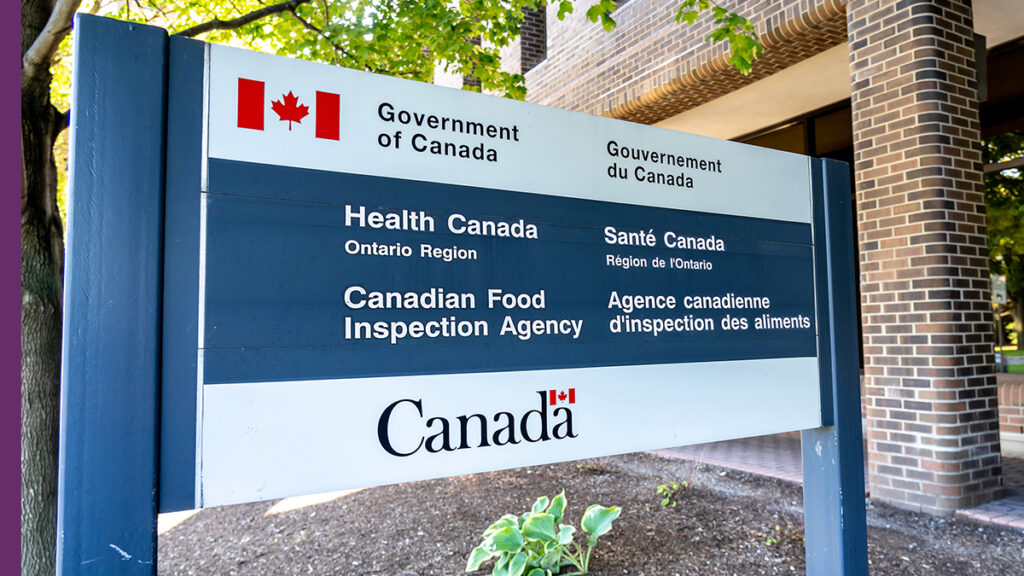
Health Canada has released an updated version of the Natural Health Products Management of Applications Policy (NHP MAP), replacing the previous guidance published in April 2019. The revised NHP MAP was released alongside updates to the Web Product Licence Application (PLA) form and the Amendment and Notification Form (ANF), reflecting changes to how Natural Health Products (NHPs) are reviewed and prioritized by the Natural and Non-prescription Health Products Directorate (NNHPD).
In short: the updated NHP MAP introduces new eligibility requirements, clearer classification rules, and more structured review processes that directly impact how and when NHP applications are assessed in Canada.
You can access the guidance documents here:
One of the most immediate signals that this is more than a minor update is the size of the guidance itself. The previous NHP MAP was approximately 43 pages, while the updated version exceeds 100 pages. The expansion reflects a more detailed description of the entire product licence application (PLA) lifecycle, including pre-submission engagement, application screening, regulatory assessment, and post-licensing oversight (though some of the additional length is due to formatting changes).
Because the NHP MAP governs how product licence applications are managed and reviewed by Health Canada, updates to this policy can directly affect submission eligibility, timelines, and regulatory strategy for companies seeking to market natural health products in Canada.
The updated NHP MAP provides guidance on how Health Canada manages and reviews Product Licence Applications (PLAs) for natural health products under the Natural Health Products Regulations (NHPR).
The document outlines:
The policy applies to Class I, II, and III NHP applications, including new product licences, amendments to existing licences, and regulatory notifications.
However, the NHP MAP does not apply to:
While the 2019 guidance focused primarily on how applications move through the review process, the updated NHP MAP expands the product lifecycle perspective, placing greater emphasis on post-licensing management and ongoing compliance.
While many updates clarify existing processes, several changes have meaningful implications for NHP manufacturers, importers, and licence holders.
One of the most important updates is the introduction of explicit market-based eligibility criteria for submissions.
Health Canada now requires applicants to confirm that their product will be:
These questions are now embedded directly into the Web PLA form, and the system will not allow submission unless at least one of these conditions is met.
Previously, a separate Workload Management Form was used to determine eligibility under a six-month timeframe. The updated approach:
For industry, this signals that NNHPD is prioritizing submissions tied to active Canadian market activity or benefit to Canadian manufacturing, rather than speculative or dormant applications.
The updated NHP MAP extends this market-focused approach to post-licensing submissions.
Amendments and notifications will now be prioritized for products that:
Health Canada also encourages companies to discontinue licences for products that are no longer sold or intended for the Canadian market.
For companies managing large product portfolios, this reinforces the importance of maintaining an active and accurate inventory of product licences.
The revised NHP MAP provides more detail on how NHP applications are classified and assessed.
Updates include:
The document also clarifies expectations related to:
For companies developing new products, these expanded explanations provide a clearer framework for determining the appropriate submission pathway.
The updated guidance formalizes Health Canada’s approach to pre-submission engagement.
Notable clarifications include:
The guidance also outlines expectations for pre-submission information packages, providing clearer direction for applicants seeking feedback.
The revised NHP MAP includes expanded detail on how applications move through:
Health Canada has also clarified its approach to Information Request Notices (IRNs).
Key points include:
These changes reinforce the importance of submitting complete and high-quality applications from the outset.
The updated NHP MAP devotes significantly more attention to post-licensing activities.
Expanded areas include:
Additional appendices provide detailed guidance on:
For licence holders, this provides a clearer roadmap for managing ongoing regulatory obligations.
In addition to the updates introduced through the revised NHP MAP, Health Canada has clarified how product licence applications (PLAs) are assigned for review, addressing ongoing questions related to application backlogs.
Due to the high volume of submissions, applications are not always reviewed based on their original submission date.
Instead, review order is determined based on when prioritization was established, depending on whether the application was submitted before or after the December 15, 2025 system update.
Applications submitted before December 15, 2025
Review order will be based on:
Applications submitted on or after December 15, 2025
Review priority is based on:
This reflects the transition to the updated NHP MAP eligibility framework, where attestations are now built directly into the PLA form.
For companies with applications already in the system, this means the prioritization date—not the original submission date—may determine when an application is reviewed.
Because the updated NHP MAP and review prioritization approach are already in effect, companies should review their regulatory strategies to ensure alignment.
Key steps include:
Even where requirements have not fundamentally changed, the updated NHP MAP provides greater clarity on how NNHPD interprets and applies regulatory expectations.
The updated NHP MAP reflects Health Canada’s effort to streamline application management while focusing regulatory resources on products that will benefit the Canadian market.
For industry, this means greater transparency—but also higher expectations for submission quality, classification accuracy, and regulatory planning.
dicentra has completed more than 24,000 regulatory and compliance projects supporting companies in the natural health product sector. We assist clients with NPN applications, regulatory strategy, product classification, amendments, notifications, and ongoing licence maintenance.
Our team helps organizations interpret evolving Health Canada guidance and translate it into practical regulatory strategies that support successful product launches and long-term compliance.
If you would like to understand how the updated NHP MAP may affect your product pipeline or existing licences, connect with dicentra today.