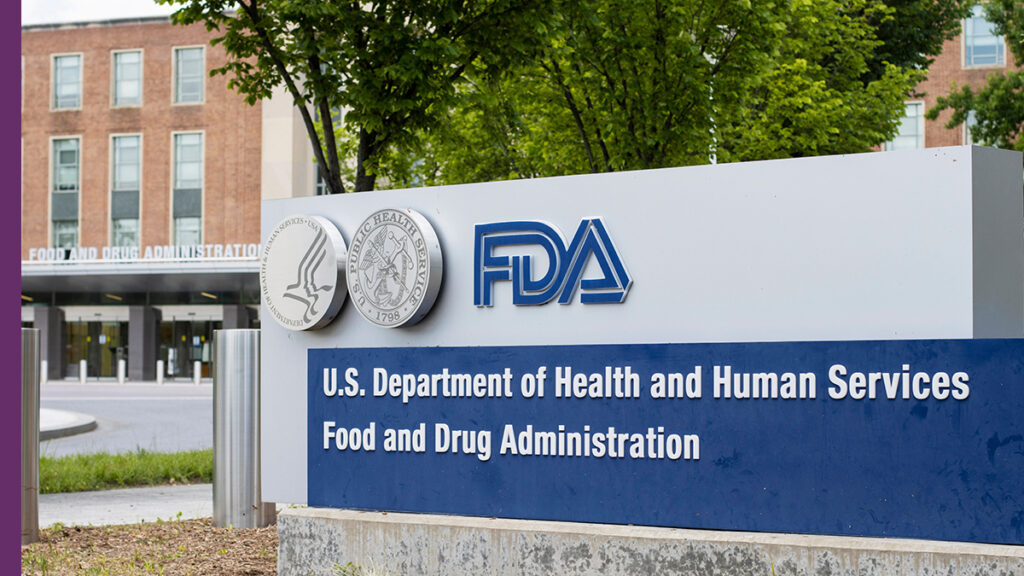
The U.S. Food and Drug Administration (FDA) has officially reversed its position on beta-nicotinamide mononucleotide (NMN), concluding that the ingredient is not excluded from the definition of a dietary supplement.
This marks a significant policy shift from the agency’s 2022 determination, which had effectively removed NMN from the supplement market under the drug preclusion clause of the Federal Food, Drug, and Cosmetic Act (FD&C Act).
In short: NMN may be eligible to proceed through the New Dietary Ingredient (NDI) pathway, and will not be considered adulterated for marketing as a dietary supplement in the United States if reasonable assurance is provided that the NDI does not present a significant or unreasonable risk of illness or injury.
In November 2022, the FDA determined that NMN was “an article authorized for investigation as a new drug,” citing investigational studies involving NMN formulations such as MIB-626.
Under section 201(ff)(3)(B) of the FD&C Act, this triggered the drug preclusion clause, which prevents ingredients from being marketed as dietary supplements if they were first authorized for investigation as a new drug (IND).
At the time, the FDA rejected arguments that NMN had been marketed as a food or supplement prior to drug investigation, concluding that the evidence provided did not meet the statutory definition of sale as a food ingredient. This position was reaffirmed in a supplemental letter, despite pushback from industry stakeholders.
The result was immediate disruption across the supplement market, with companies facing uncertainty around product legality, commercialization, and regulatory strategy.
In a letter dated September 29, 2025, the FDA confirmed that it has reconsidered its interpretation of the drug preclusion provision and determined that NMN is not excluded from the dietary supplement definition.
As part of this decision, the FDA:
This reversal follows a citizen petition submitted by industry groups, including the Natural Products Association (NPA) and the Alliance for Natural Health USA, requesting that the FDA revisit its earlier conclusion. However, it should be noted that an NDIN is not a general approval of an substance—it is a notifier-specific safety conclusion for a defined production process of that ingredient under its specific conditions of use.
Beyond restoring market access, this decision creates a clear and compliant regulatory pathway:
NMN can now move forward through the New Dietary Ingredient (NDI) notification framework.
This is a key shift for industry.
Rather than operating in a regulatory grey zone, companies now have a defined route to demonstrate safety and compliance through NDI submissions. For manufacturers and ingredient suppliers, this means:
For organizations that paused development or market entry plans following the 2022 decision, this reversal reopens the door.
The FDA’s reassessment reflects not only a legal reinterpretation, but also the growing body of scientific and clinical evidence surrounding NMN.
NMN is a naturally occurring molecule involved in the NAD+ biosynthesis pathway, and research has increasingly focused on its role as a precursor to NAD+, with implications for cellular metabolism and healthy aging.
Over the past several years, continued investment in scientific research—including clinical investigations evaluating NMN in the context of NAD+ metabolism—has strengthened the overall evidence base supporting its safe use.
This combination of historical marketing evidence and scientific data likely contributed to the FDA’s decision to revisit and revise its position.
1. Market Reinstatement for NMN Products
Companies can now reintroduce or continue marketing NMN-containing products in the U.S. dietary supplement market without the same level of regulatory uncertainty that followed the 2022 decision.
2. A Precedent for Future Ingredients
The FDA’s reversal signals a more nuanced interpretation of the drug preclusion clause—particularly around timing and prior marketing evidence.
However, the agency did not define what constitutes “substantial” clinical investigation, leaving some uncertainty for future ingredients navigating similar regulatory challenges.
3. Increased Importance of Regulatory and Clinical Strategy
This decision reinforces the importance of aligning regulatory planning with scientific development.
Key considerations include:
For novel ingredients, early integration of regulatory and clinical strategies will be critical to avoiding similar disruptions.
In light of this development, companies should consider the following steps:
The FDA’s reversal on NMN highlights how regulatory outcomes can evolve alongside scientific evidence and sustained industry engagement.
With NMN now positioned for the NDI pathway, companies have a clear opportunity to bring compliant, science-backed products to market. However, success will depend on the strength of the underlying regulatory and clinical strategy.
Reach out to dicentra today for support with bringing your NMN ingredients to market.