
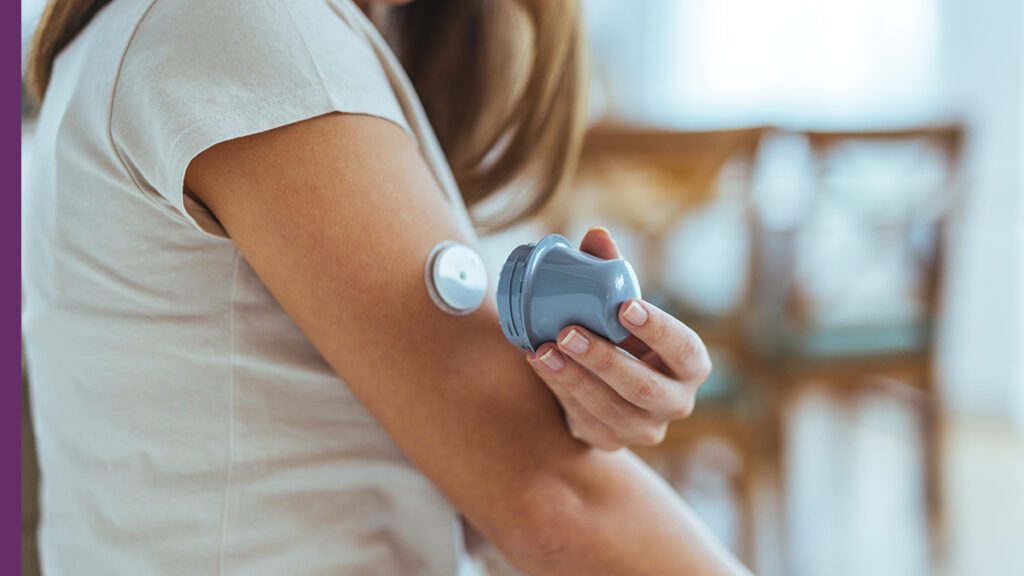
The U.S. Food and Drug Administration (FDA) classifies medical devices into Class I, Class II, or Class III according to the regulatory controls necessary to provide reasonable assurance of safety and effectiveness. In general, regulatory requirements increase with the level of risk and complexity associated with the device.
Classification also plays an important role in determining the pathway a manufacturer may need to follow before marketing a device in the United States.
Many Class I devices are exempt from premarket notification. For many Class II devices, manufacturers pursue a 510(k) Premarket Notification by demonstrating substantial equivalence to an appropriate legally marketed predicate device. Novel devices without an appropriate predicate may qualify for De Novo classification if general controls, or general and special controls, can provide reasonable assurance of safety and effectiveness. Class III devices requiring premarket approval generally follow the Premarket Approval (PMA) pathway.
The distinction between 510(k) vs De Novo vs PMA affects the regulatory strategy, evidence requirements, clinical development program, quality considerations, and ultimately the path to market.
Bringing a medical device to the U.S. market begins well before preparing a submission.
One of the first questions manufacturers need to answer is deceptively simple:
What is the device, from FDA’s perspective?
FDA classification is not based solely on how sophisticated or innovative a product appears. Classification considers the device type and the level of regulatory control necessary to provide reasonable assurance of its safety and effectiveness.
Under FDA’s framework, devices are divided into Class I, Class II, and Class III. Class I devices are subject to general controls. Class II devices require general controls and special controls. Class III includes devices for which premarket approval is or will be required under section 515 of the Federal Food, Drug, and Cosmetic Act.
This classification can determine whether a device is exempt from premarket notification or whether the manufacturer will need to pursue a 510(k), De Novo request, or PMA.
But classification is only the beginning.
Device technology, intended use, indications for use, available predicates, applicable special controls, performance standards, supporting evidence, and clinical data can all affect the regulatory strategy.
Understanding these factors early can help manufacturers avoid building a development program around the wrong regulatory assumptions.
This article focuses on medical devices regulated by FDA in the United States and the relationship between device classification, risk, evidence, and the principal 510(k), De Novo, and PMA premarket pathways.
FDA’s classification regulations establish three categories of regulatory control. Class I devices are generally those for which general controls are sufficient. Class II devices are those for which general controls alone are insufficient but special controls can provide reasonable assurance of safety and effectiveness. Class III applies where general and special controls are insufficient and the device also meets criteria associated with life-supporting or life-sustaining use, substantial importance in preventing impairment of human health, or potential unreasonable risk of illness or injury.
This does not mean every device within a particular class follows exactly the same premarket process.
Some Class I and Class II devices are exempt from 510(k) requirements. Many Class II devices require 510(k) clearance. De Novo can establish a new Class I or Class II device type when there is no legally marketed device on which to base a substantial-equivalence determination. PMA is the principal premarket pathway for Class III devices subject to premarket approval requirements.
The correct strategy therefore depends on the specific device—not simply the class number.
| Consideration | 510(k) Premarket Notification | De Novo Classification | Premarket Approval (PMA) |
| Typical device classification | Primarily Class II; some Class I and certain Class III devices may also be subject to 510(k) | Creates a new Class I or Class II device type | Class III devices requiring premarket approval |
| Core regulatory question | Is the device substantially equivalent to an appropriate legally marketed predicate? | Can the novel device be reasonably regulated through general controls alone or general and special controls? | Is there reasonable assurance that the device is safe and effective for its intended use? |
| Predicate device | Required | No legally marketed predicate device on which to base a substantial-equivalence determination | Not the basis of approval |
| Risk profile | Generally low-to-moderate/moderate, depending on device type | Low-to-moderate risk suitable for Class I or II | Generally highest-risk devices subject to PMA |
| Evidence strategy | Comparative evidence supporting substantial equivalence; may include bench, analytical, biocompatibility, software, electrical, usability, animal and/or clinical evidence as applicable | Evidence characterizing the device’s risks and demonstrating that proposed controls adequately mitigate them | Valid scientific evidence providing reasonable assurance of safety and effectiveness |
| Clinical evidence | Not universally required; depends on what is necessary to support substantial equivalence | May be required depending on device novelty, risks and available evidence | Clinical investigations commonly form an important component of the evidence package, as applicable |
| Regulatory controls | Existing controls for the classified device type | Manufacturer proposes Class I or II classification and, for Class II, proposed special controls | PMA requirements plus applicable post-approval controls |
| Regulatory outcome | FDA clearance based on substantial equivalence | FDA grants the request and classifies the new device type into Class I or II | FDA approval |
| Strategic challenge | Selecting and supporting the correct predicate comparison | Establishing a new device type and defining adequate risk mitigations and controls | Building sufficiently robust evidence to demonstrate safety and effectiveness |
The evidence required within each pathway is device-specific. FDA evaluates safety and effectiveness using valid scientific evidence, and the amount and type of evidence can vary according to the characteristics of the device, conditions of use, available warnings and restrictions, and experience with its use.
The 510(k) Premarket Notification pathway is fundamentally comparative.
Rather than independently establishing safety and effectiveness in the same manner as a PMA, the manufacturer identifies an appropriate legally marketed predicate and provides information allowing FDA to determine whether the new device is substantially equivalent.
A 510(k) includes information about the device, its classification, labeling and intended use, together with a comparison to products of comparable type supported by relevant data. FDA’s regulations specifically contemplate comparisons involving characteristics such as materials, design, energy used or delivered, and operational principles.
The predicate therefore matters enormously.
A legally marketed predicate may include a device legally marketed before May 28, 1976, an appropriate device reclassified from Class III into Class I or II, or a device previously found substantially equivalent through the 510(k) process.
Manufacturers need to evaluate whether the proposed device has the same intended use and whether differences in technological characteristics raise different questions of safety and effectiveness.
The evidence package depends on the device and the differences from the predicate.
Depending on the technology, supporting evidence may include:
Clinical trials are therefore not automatically required for every 510(k).
However, neither should manufacturers assume that choosing the 510(k) pathway means clinical evidence will never be needed. FDA’s regulations expressly address 510(k)s supported by clinical data, including requirements relating to human-subject protections and investigations conducted outside the United States.
The appropriate evidence strategy should be based on the device, predicate comparison, identified differences and questions of safety and effectiveness—not simply on the name of the submission pathway.
A device may present relatively manageable risks while still lacking an appropriate predicate.
This is where the De Novo pathway becomes particularly important.
FDA’s De Novo framework provides a pathway to classify novel medical devices into Class I or Class II when no legally marketed device exists on which to base a substantial-equivalence determination, provided the device meets the criteria for Class I or Class II.
There are two routes for pursuing a De Novo classification:
De Novo should therefore not be understood simply as a pathway for a device that “failed” a 510(k).
It is a regulatory mechanism for establishing a new device type.
That difference changes the manufacturer’s task.
Instead of asking:
How is our device substantially equivalent to an existing device?
the central question becomes:
What are the probable risks of this new device type, and can general controls—or general and special controls—adequately address them?
A De Novo request requires manufacturers to build a structured case around classification, risk, controls, and evidence.
The submission includes a summary of known or reasonably known probable risks and proposed mitigations. If Class II classification is proposed, the request also includes proposed special controls and an explanation of how those controls provide reasonable assurance of safety and effectiveness.
Evidence can include both nonclinical and clinical studies.
Where clinical investigations are submitted, the De Novo framework calls for information concerning study design, population, safety and effectiveness data, adverse reactions and complications, statistical analyses, device failures and other relevant findings. The request must also address benefit-risk considerations and demonstrate that the supporting information constitutes valid scientific evidence.
This makes early risk analysis particularly valuable.
The manufacturer is not merely demonstrating that its own device performs adequately. It may also be helping establish the regulatory controls for an entirely new device type.
Once FDA grants the De Novo request, the device is classified into Class I or Class II and, where applicable, FDA establishes special controls.
For Class III devices requiring premarket approval, PMA represents the most stringent of the three principal pathways discussed here.
FDA’s PMA regulations apply to Class III devices meeting the applicable statutory and regulatory criteria, and a PMA is defined as a premarket approval application for a Class III medical device.
The regulatory question is fundamentally different from a 510(k).
A manufacturer is not seeking clearance based on substantial equivalence to a predicate. The PMA must contain evidence sufficient for FDA to determine whether there is reasonable assurance that the device is safe and effective for its intended use.
The required package is correspondingly extensive.
PMA regulations require separate sections addressing nonclinical laboratory studies and clinical investigations involving human subjects. The application also addresses the device’s indications for use, design and operation, manufacturing processes, performance standards, technical data, study results, and conclusions concerning safety, effectiveness and benefit-risk.
Technical sections can include microbiological, toxicological, immunological, biocompatibility, stress, wear, shelf-life and other laboratory or animal testing, as appropriate, together with detailed results from clinical investigations.
For many PMA devices, clinical development becomes a central component of the regulatory strategy.
A manufacturer may need clinical evidence capable of supporting the intended indication, patient population, safety profile and effectiveness of the device. Study design, endpoints, statistical analysis, patient selection, follow-up and device accountability should therefore be aligned with the intended PMA strategy early in development.
For significant-risk device investigations, an Investigational Device Exemption (IDE) may be required before the investigational device can be studied in human subjects in the United States. Under 21 CFR Part 812, a sponsor must submit an IDE application when it intends to use a significant-risk device in an investigation, subject to the applicable requirements.
An approved IDE permits an investigational device that would otherwise be subject to certain premarket requirements to be shipped lawfully for purposes of conducting the investigation.
Clinical strategy and regulatory strategy therefore should not be developed independently.
The study needs to generate evidence that answers the regulatory questions FDA will ultimately need to evaluate.
One of the most important distinctions for manufacturers is that device class does not automatically equal submission pathway.
Class I, II and III describe categories of regulatory control.
510(k), De Novo and PMA are regulatory mechanisms through which particular devices may reach or establish their appropriate marketing status.
This distinction matters because a manufacturer could correctly identify that a device appears to present moderate risk while still choose the wrong regulatory pathway.
For example, identifying a product as likely Class II does not answer whether:
The pathway should therefore emerge from the complete classification analysis rather than from risk level alone.
Classification should be addressed early enough to influence product development, testing, clinical strategy and commercialization planning.
Manufacturers should consider several questions.
What is the device’s intended use?
Intended use and indications can materially affect classification and the regulatory pathway. Two technologically similar products may not necessarily have the same regulatory strategy when they are intended for different uses or patient populations.
Does FDA already regulate this device type?
Manufacturers should search FDA classification regulations, product codes, previous 510(k)s, De Novo decisions and PMAs to understand how comparable products have been regulated.
Is there an appropriate predicate?
For a 510(k), identifying a device that merely looks similar is not enough. The predicate needs to support a defensible substantial-equivalence strategy.
What are the device’s technological characteristics?
Design, materials, energy source, software, operating principles and other characteristics can affect whether an existing classification and predicate remain appropriate.
What are the probable risks?
Risk analysis is especially important for De Novo requests, where the manufacturer may need to propose special controls capable of mitigating identified risks.
What evidence will FDA need?
The answer can range from relatively focused performance testing to extensive nonclinical and clinical programs. FDA relies on valid scientific evidence when determining safety and effectiveness, and the evidence required varies with the device and its conditions of use.
Will clinical evidence be necessary?
Clinical evidence may arise in 510(k), De Novo, and PMA programs. The need for a clinical investigation should be assessed according to the regulatory questions that cannot be adequately resolved through existing information and nonclinical testing.
Does the quality system support the regulatory strategy?
Regulatory authorization is only one part of market readiness. Manufacturers also need an appropriate quality management system that supports design and development, risk management, supplier controls, manufacturing, corrective and preventive actions, records, and post-market responsibilities.
As of February 2, 2026, FDA’s Quality Management System Regulation (QMSR) is effective and should be considered when assessing quality-system readiness and preparing for U.S. market entry.
Addressing these questions early can prevent a common problem:
Developing the device first and attempting to determine the regulatory pathway afterward.
At dicentra, we support medical device manufacturers throughout the regulatory, clinical, and quality lifecycle—from initial product classification and FDA strategy through premarket submissions, clinical investigations, quality-system development, and post-market compliance.
Regulatory Affairs
Our regulatory team can support manufacturers with:
Clinical Trials
Where clinical evidence is required, dicentra’s clinical team can support:
Quality Systems Compliance
Our quality team can also support manufacturers with:
Choosing between 510(k) vs De Novo vs PMA starts with correctly understanding the device, its intended use, its risks, the existing regulatory landscape, and the evidence needed to support the proposed pathway.
Making that determination early can align regulatory strategy with product development, testing, clinical evidence, quality systems and commercialization planning—and reduce the risk of discovering significant evidence or submission gaps later in development.
Contact dicentra for support with FDA medical device classification, 510(k), De Novo and PMA strategy, clinical development, and quality-system compliance.